
1. Overview
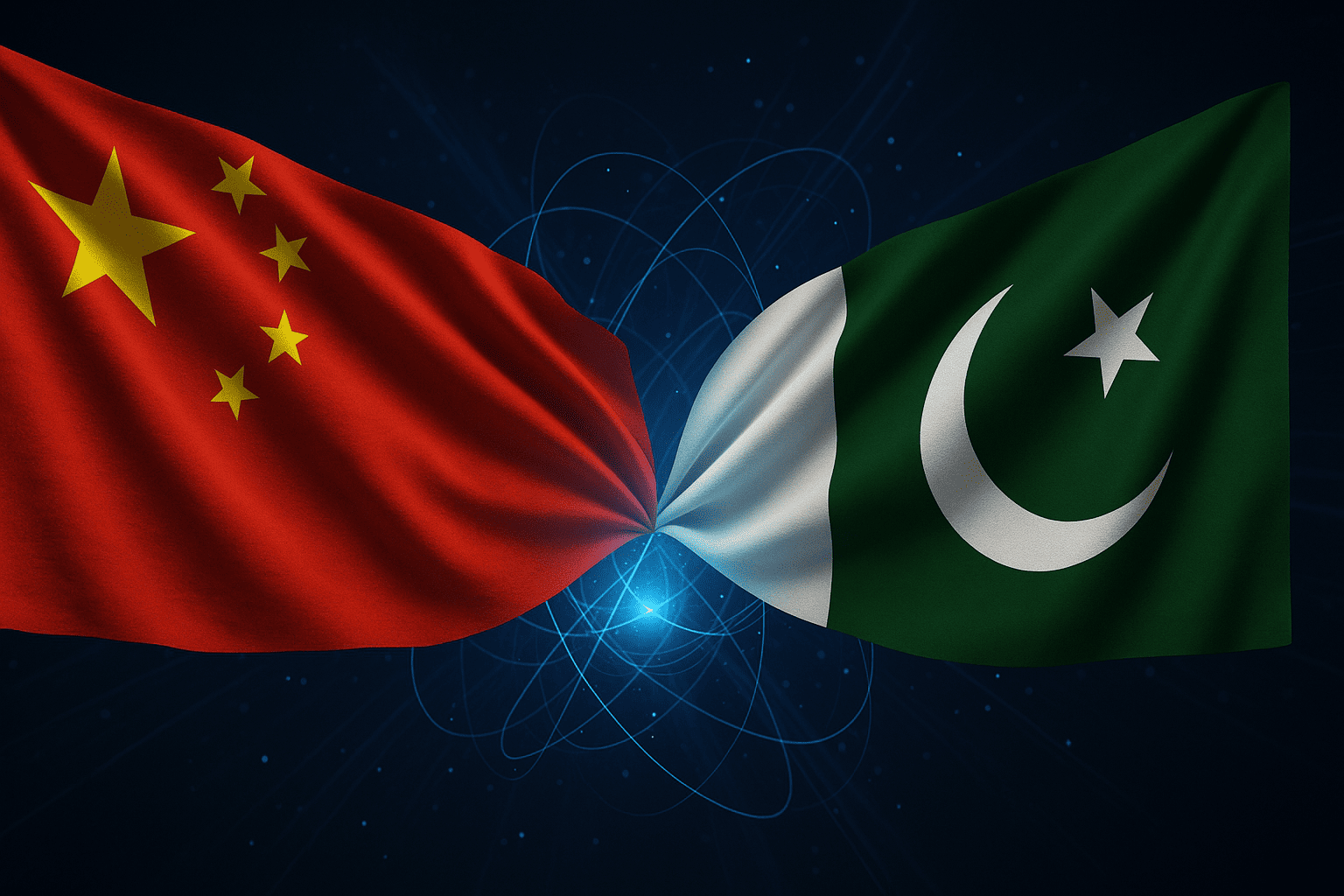
On 23–24 October 2025, Pakistan and China signed a key Memorandum of Understanding (MoU) in Islamabad to deepen their cooperation in quantum technologies and other emerging tech fields. (Radio Pakistan)
The Pakistani counterpart is the Emerging Technologies Lab (a PSDP-funded initiative under Pakistan’s Ministry of Planning, Development & Special Initiatives) and the Chinese partner is the China Electronics Technology Group Corporation (CETC), a major state-owned technology conglomerate in China. (Profit by Pakistan Today)
At the signing ceremony, Pakistan’s Planning Minister Ahsan Iqbal declared that China will assist Pakistan in setting up a “National Center for Quantum Computing.” (Gwadar Pro)
The MoU also highlights cooperation under the umbrella of the Special Technology Zones Authority (STZA) and the broader framework of the China–Pakistan Economic Corridor (CPEC) Phase-II. (The Daily CPEC)
2. Key Elements of the Agreement
2.1 Areas of Cooperation
The MoU outlines multiple collaborative thrusts:
- Joint research and development in quantum technologies (computing, communications, sensing). (Profit by Pakistan Today)
- Capacity building and human resource development in these emerging fields. (Radio Pakistan)
- Establishment of research infrastructure: Pakistan will get help from China in establishing a National Centre for Quantum Computing. (Business Recorder)
- Broader technology ecosystem integrities, including linkages to digital transformation, industry modernization, and innovation hubs (e.g., Pakistan’s envisioned “Quantum Valley”). (https://www.dailyindependent.com.pk)
2.2 Institutional / Strategic Anchors
- Pakistan’s “Uraan Pakistan” initiative: This is cited by Minister Iqbal as a vehicle to integrate advanced technologies (quantum, AI, robotics) into national development. (Gwadar Pro)
- The Special Technology Zones Authority (STZA) in Pakistan is already involved in coordinating China-Pakistan tech investment via the “China–Pakistan Science & Technology Cooperation Centre” (launched 2022 in Beijing) which sets the precedent for tech collaboration. (stza.gov.pk)
- CPEC Phase-II is explicitly referenced as a pillar for technological cooperation beyond infrastructure, focusing on human capital, digitalization and industrial modernization. (App)
3. Strategic Importance & Implications for Pakistan
3.1 Why Quantum Tech Matters
- Quantum technologies (quantum computing, quantum communications, quantum sensing) represent a strategic frontier: they hold potential to transform computing power, secure communications, materials science, and national competitiveness.
- Pakistan launching a national centre and building capabilities positions it to participate in the global “Fourth Industrial Revolution” rather than remain a passive consumer of technology. Minister Iqbal emphasised that quantum and AI are the “foundation of modern economies”. (https://www.dailyindependent.com.pk)
3.2 Capacity Building & Innovation Ecosystem
- This MoU could catalyse the development of a quantum-ecosystem in Pakistan: universities, labs, startups, special technology zones (STZs) oriented around quantum/advanced tech.
- The “Quantum Valley Project” announced in Pakistan aims to create a hub akin to a Silicon Valley, with innovation, start-ups and knowledge-based industries. (Radio Pakistan)
3.3 Industrial & Economic Dimensions
- By partnering with China’s CETC, Pakistan gains access to advanced know-how, potential manufacturing linkages, and integration into Chinese innovation chains.
- As part of CPEC Phase-II, tech cooperation can help diversify Pakistan’s economy, boost exports, and shift toward higher-value sectors beyond commodity/traditional manufacturing.
- Human resource development: Pakistan must train engineers/researchers in quantum fields; this agreement signals the start of such capacity investment.
3.4 Geopolitical/Technological Positioning
- In the broader geopolitical tech race (between the US, China, EU), Pakistan aligning with China for frontier technologies may shift its strategic tech posture.
- For Pakistan, this cooperation offers a chance to leapfrog in certain domains rather than rebuilding from scratch.
- For China, deepening technology links with Pakistan strengthens BRI/CPEC ties and maybe helps China spread its tech standards and innovation ecosystem.
4. Key Challenges & Risks
While the collaboration holds promise, there are realistic hurdles:
4.1 Skill, Infrastructure & Research Base
- Quantum technologies are highly complex and require advanced infrastructure (cryogenic systems, quantum sensors, high-precision fabrication) and specialized talent. Pakistan will need to build that from the ground up.
- Ensuring that the national centre does not remain simply symbolic but becomes a functioning research hub.
4.2 Technology Transfer & Local Value
- One risk is that cooperation remains heavily Chinese-led, with Pakistan less in the driver’s seat. Ensuring local capacity and intellectual property transfer will be key.
- Creating local ecosystem (startups, labs, manufacturing) requires not just agreements but sustained investment, policy support, and incentives.
4.3 Absorptive Capacity & Governance
- Pakistan must create supportive regulatory, funding and policy environments for R&D and commercialization of quantum tech.
- Ensuring security, data governance, export controls, and international cooperation issues (quantum tech has dual-use potential) will require strong institutional frameworks.
4.4 Alignment with National Development Needs
- The research must be aligned with Pakistan’s national priorities (e.g., telecommunications security, healthcare, agriculture, industry) so that quantum investment supports broader socio-economic goals and not just prestige.
5. Possible Timeline & Next Steps
Based on available information:
- 2025–2026: Implementation phase of the MoU — building institutional links, capacity building programs, initial R&D projects, scouting for Pakistani and Chinese talent/institutions.
- 2026–2028: Launch of Pakistan’s National Centre for Quantum Computing; early joint projects (algorithm development, quantum communications testbeds).
- 2028–2030: Development of “Quantum Valley” innovation hub; start of local manufacturing/ startups; commercialization of quantum-enabled products/services; integration into CPEC tech corridor.
- Beyond 2030: Pakistan as an active player in quantum supply-chains, contributing to applied quantum solutions (industry, security, communications) and possibly exporting certain capabilities.
6. Why This Is Important for Your Audience (Tech Enthusiasts & Academics in Pakistan)
Given that you create tech-related content and want to engage a knowledgeable audience:
- Your readers will find value in understanding what quantum technologies are, why they matter, and how Pakistan is positioning itself. They don’t see many detailed local write-ups.
- You can dissect the agreement, show what the “National Centre for Quantum Computing” might mean, what resources it could entail (hardware, talent, partnerships) — offering an insider lens.
- You can relate this to broader themes: how Pakistan can build a quantum-ecosystem, what students/researchers should focus on now (quantum algorithms, quantum communications, quantum sensing) to ride this wave.
- You can critique or reflect: what practical steps Pakistan must take; what obstacles lie ahead; how this could change Pakistan’s tech landscape.
7. Suggested Structure for a Blog Post
Title: “Pakistan and China Deepen Quantum Technology Collaboration: What It Means for the Future”
Sections:
- Introduction – brief summary of the MoU and its significance.
- What are Quantum Technologies? – explain in accessible terms (computing, communications, sensing).
- Details of the Pakistan-China Agreement – describe the MoU, parties involved, key commitments.
- Strategic Implications for Pakistan – capacity-building, innovation ecosystem, economic dimensions.
- Challenges and Roadblocks – skills, infrastructure, governance, technology transfer.
- What to Watch For – timeline of next steps, upcoming milestones, opportunities for students/startups.
- What This Means for You (the reader) – guidance for students, researchers, tech professionals in Pakistan on how to engage.
- Conclusion – reflections on how this could shape Pakistan’s tech future.
8. Final Thoughts
The Pakistan–China quantum technology collaboration marks a potential milestone in Pakistan’s journey toward advanced technology and innovation. If executed well, it could bridge the gap between ambition and capacity, shift Pakistan’s role from technology consumer to contributor, and open new pathways for research, industry and talent development. But the promise comes with real effort: building infrastructure, training talent, aligning policy, and creating a living ecosystem, not just signed agreements.
For tech-enthusiasts, students and innovators in Pakistan, this is a signal: quantum is moving from theory to policy to possible action — the question is whether we seize the moment.